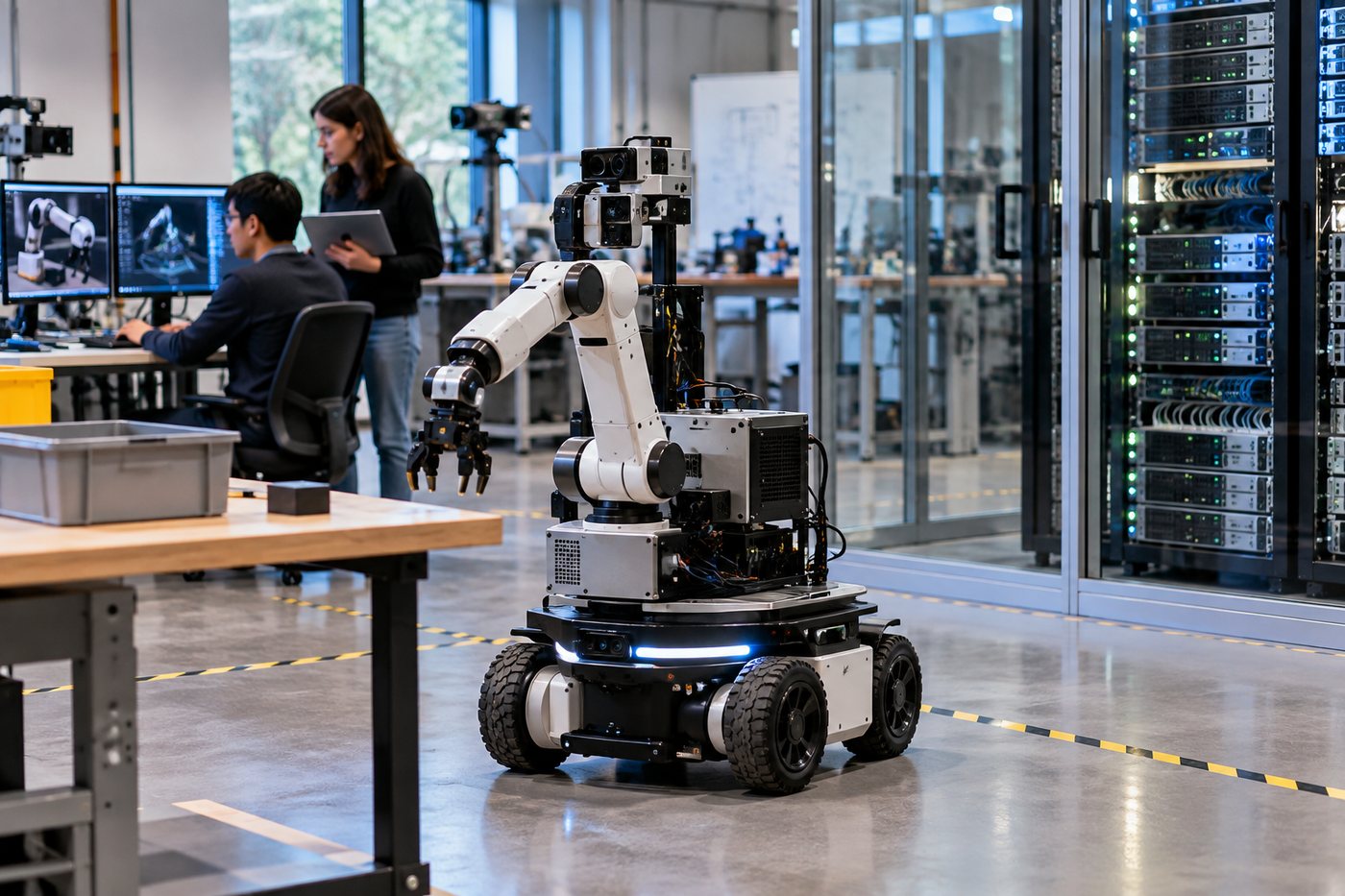
Microsoft Research has added inference offload to its open-source Physical AI Toolchain, allowing robot AI workloads to run on external GPUs instead of being confined to onboard compute. The new path is designed around containers and Kubernetes so developers can place inference on a nearby edge server or, when conditions allow, in the cloud without rebuilding the entire robot control stack.
The release is backed by a measurement study of mobile manipulation workloads across onboard, edge and cloud GPUs. The researchers argue that larger physical-AI models are increasingly constrained by memory, power and latency when every stage of inference is forced onto the robot itself.
What the measurements showed
In Microsoft’s tests, smaller onboard GPUs were materially slower than larger external accelerators on several representative workloads. Mapping and planning slowed by as much as 383% versus an A100 in one comparison, while timely obstacle detection in navigation fell by about 30% on lighter hardware. For some vision-language-action workloads, the extra latency was enough to cut manipulation accuracy roughly in half.
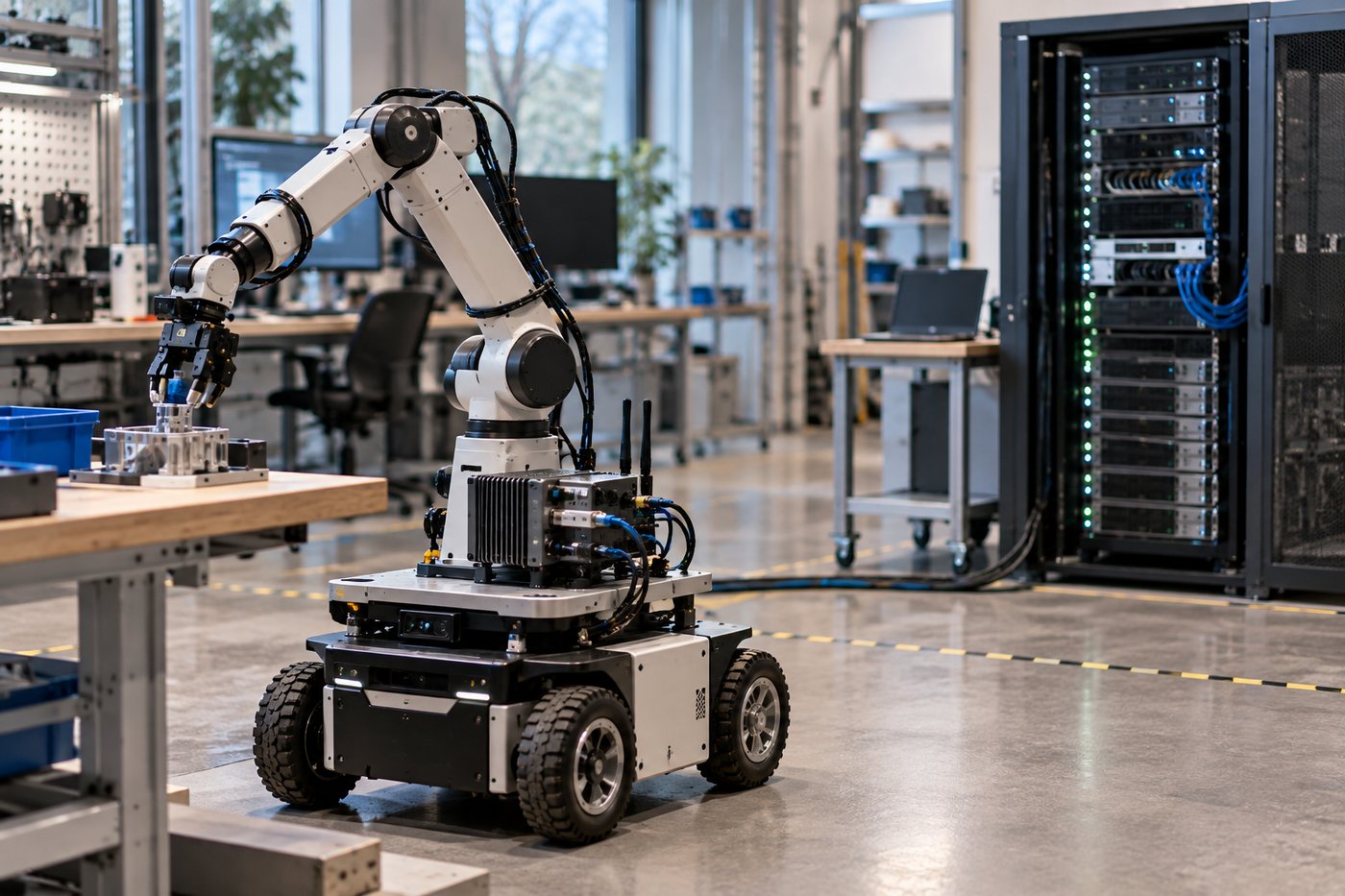
Power was another constraint. In one Stretch 3 setup, replacing a large onboard GPU with a Raspberry Pi 5 and moving inference to an external accelerator more than doubled battery life. That figure is workload-specific rather than a universal promise, but it illustrates the system-level cost of carrying high-end compute on every robot.
Why this is not simply “move everything to the cloud”
Robots operate in closed perception-action loops, which makes network behavior unusually important. Delayed observations or commands can directly reduce accuracy and, in some situations, affect safety. Microsoft’s technical report shows that the benefits of offload erode when round-trip latency or wireless contention rises.
That is why the architecture emphasizes nearby edge GPUs first, with cloud capacity as another tier rather than the default destination. Kubernetes provides a common control plane for placing containers on the robot, an on-premises GPU box or cloud infrastructure, while deployment policy can account for available compute and network conditions.
What changed in the Physical AI Toolchain
The Physical AI Toolchain now includes machinery to separate GPU inference from the rest of a robotics application, package it into a remote container and deploy it to a selected accelerator. The public repository documents RPC-based remote inference along with integrations for ROS 2, LeRobot and Microsoft’s Azure/NVIDIA robotics stack.
Microsoft has published example offload projects for SO-101 and UR10e robots and demos of its Rho model running on an external Jetson Thor while a Mobile Aloha platform executes the actions. The broader goal is to reduce per-robot compute requirements and make fleet-scale model upgrades easier to manage.
Why it matters
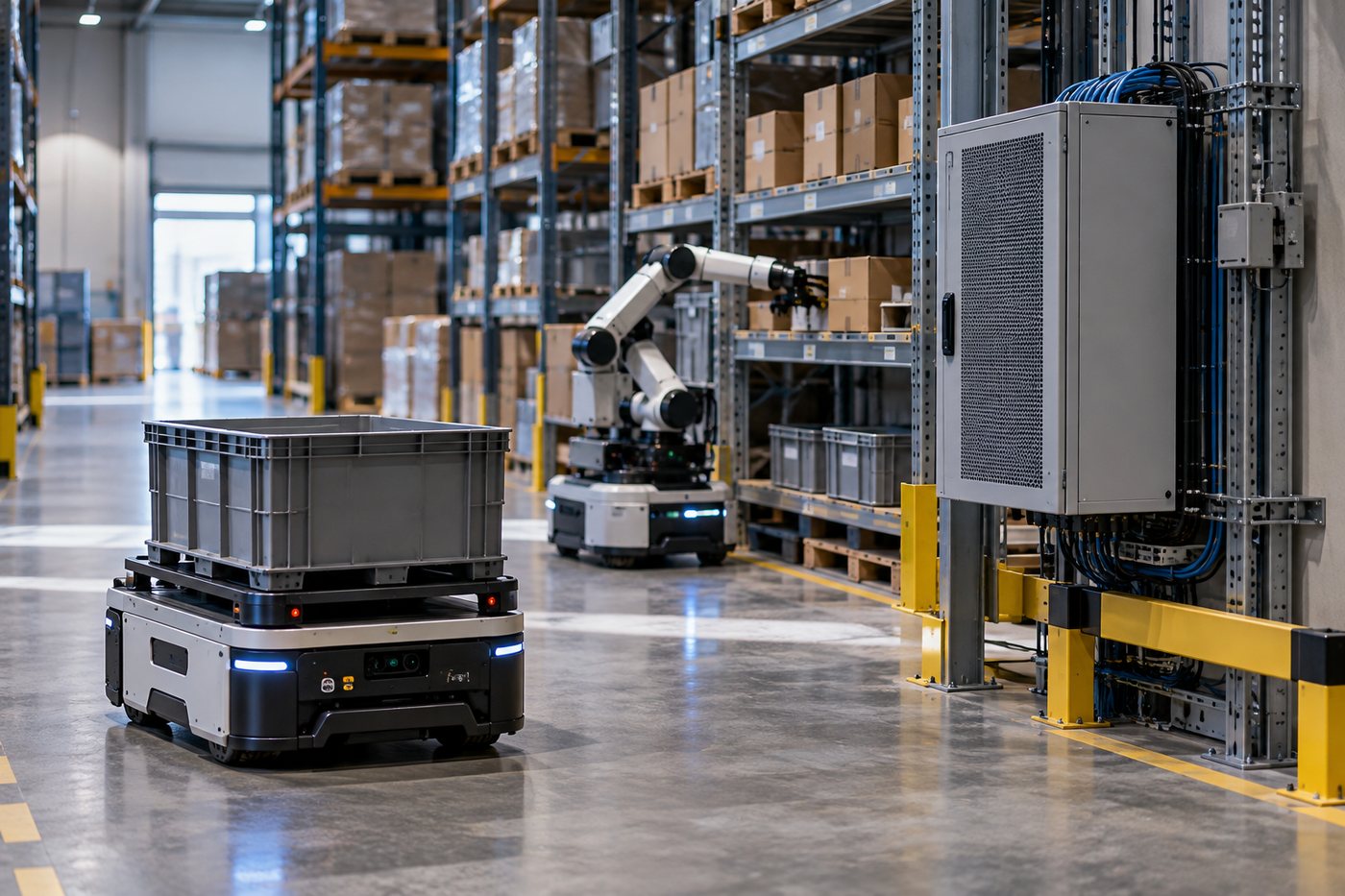
Physical-AI models are becoming more compute-intensive. Equipping every robot with a powerful GPU increases cost, weight and power draw, and it can make model upgrades dependent on hardware refresh cycles. Remote inference offers a different systems design: keep sensing, control and minimal compute onboard while serving heavyweight models from shared accelerators.
The research also makes the limits explicit. A poor network can make offload worse than local execution. The important development is therefore not a blanket claim that cloud inference is superior, but an open toolchain and a set of measurements that make onboard-versus-edge-versus-cloud placement a practical engineering decision.