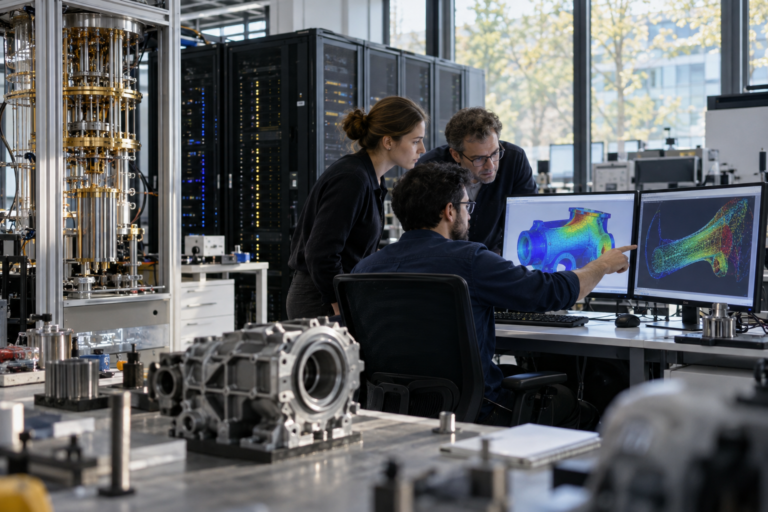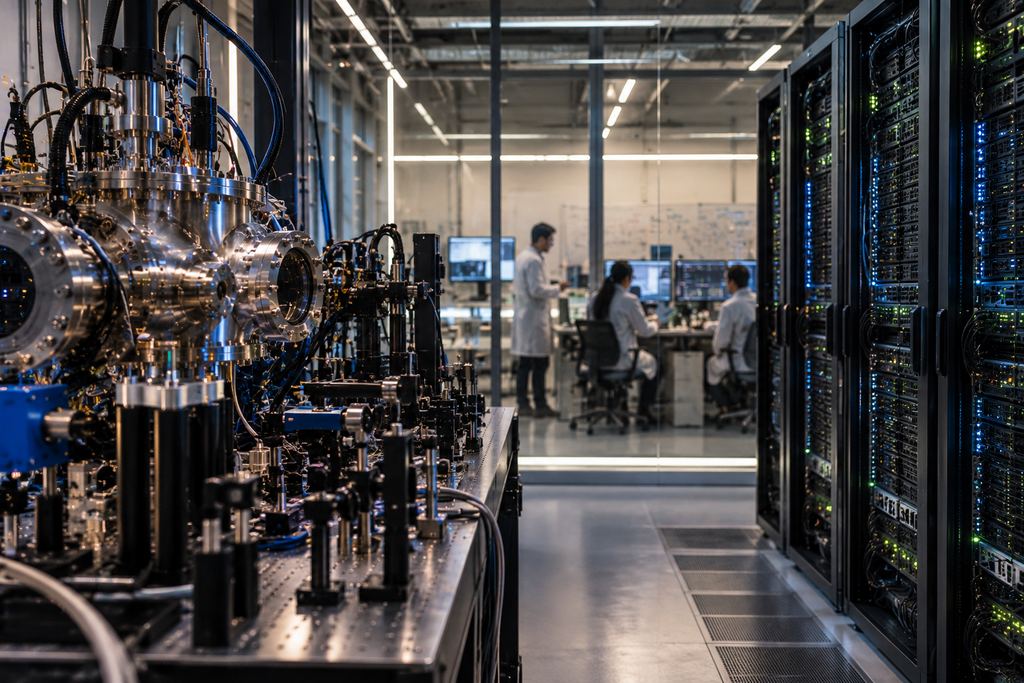
IonQ says its Superion 256 system will become the first on-premises quantum processor installed at NVIDIA’s Accelerated Quantum Research Center, or NVAQC. The deployment is planned for 2027 and is designed as a hybrid computing testbed rather than an attempt to replace conventional accelerators with a quantum machine.
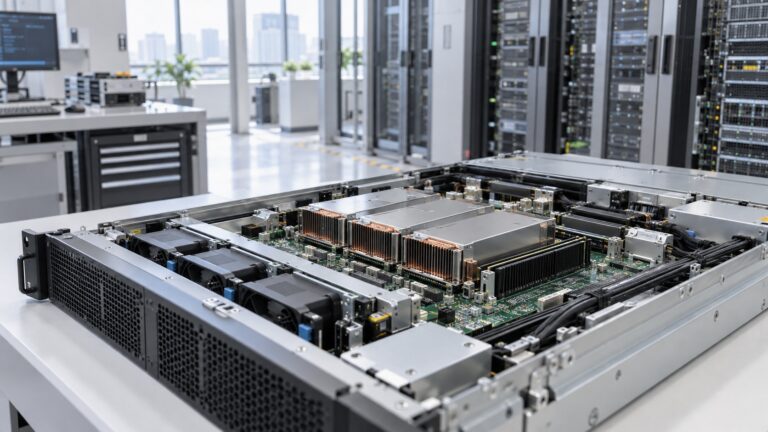
The Superion system will connect directly to an NVIDIA GB200 NVL72 platform through NVQLink, with hybrid workloads orchestrated using CUDA-Q. The goal is to study how a quantum processor can operate as one component of a larger accelerated-computing stack in which CPUs and GPUs continue to handle most data preparation, optimization and post-processing.
What happened
IonQ introduced Superion 256 on September 8 as the sixth generation of its quantum computing platform. The company is taking orders now, with first customer deliveries scheduled for 2027. The NVAQC installation gives the new system a defined role inside NVIDIA’s quantum-classical research infrastructure.
NVIDIA originally announced NVAQC in 2025 as a research center focused on integrating quantum hardware with AI supercomputers. Its planned infrastructure includes GB200 NVL72 systems and CUDA-Q so researchers can work on hybrid algorithms, low-latency hardware control and the engineering problems that come with quantum error correction.
IonQ says the joint program will focus on hybrid software development, large-scale system prototyping and quantum-GPU co-design. The partners also plan to produce open research results and implementation guidance intended to be useful to the broader quantum-computing ecosystem.
Potential application areas named by IonQ include portfolio optimization and risk modeling, materials science and computational chemistry for drug discovery. Those remain research targets; neither company is claiming that the installation has already demonstrated practical quantum advantage in those workloads.
Why it matters
A useful hybrid quantum computer depends on more than qubit quality. Latency, data movement, control systems and orchestration determine whether a QPU can contribute to a real end-to-end workflow. A direct QPU-to-GB200 connection gives researchers a place to measure those constraints on physical hardware rather than only in simulations.
For NVIDIA, the project extends CUDA-Q from a software platform into a tightly coupled hardware research environment. For IonQ, it is a test of whether Superion 256 can fit the data-center model the company is targeting, where quantum processors operate alongside GPU infrastructure instead of as isolated lab systems.
The deployment should not be read as evidence that quantum computers are ready to replace classical systems. Its significance is narrower and more practical: researchers will have a new environment for testing where quantum acceleration actually helps and what engineering is required to make quantum and GPU resources behave like one computing system.