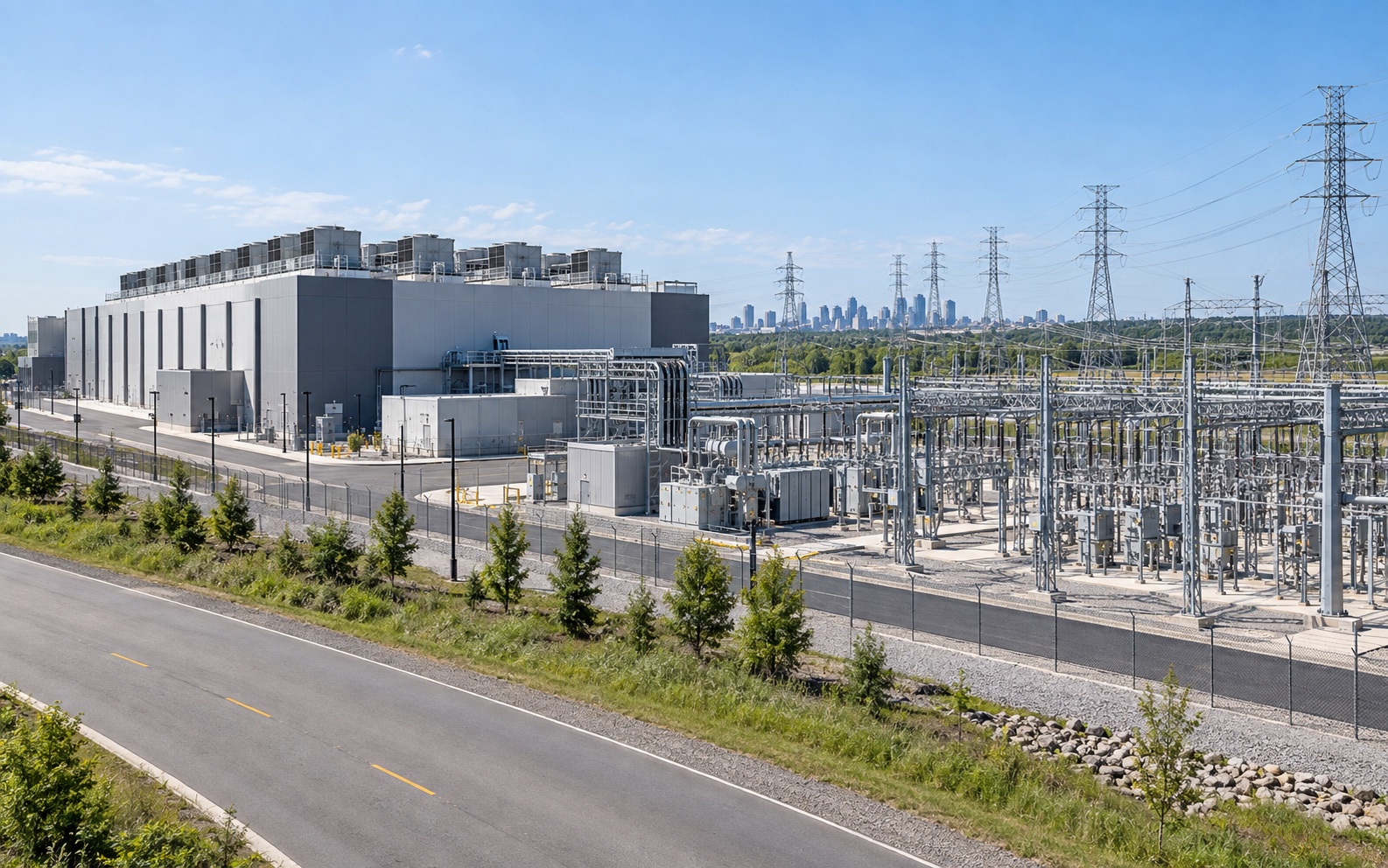
Google, Nvidia and startup Emerald AI have formed the AI Energy Management Alliance, an effort to connect new data centres to power systems more quickly. Its premise is simple: in the rare hours when demand peaks, a data centre can temporarily reduce consumption, defer non-critical work or move it to another region.
What flexible load means
The alliance says this approach could unlock as much as 100 gigawatts of capacity in existing networks. It is not new generation, nor 100 gigawatts of permanent supply. It is capacity that grids reserve for the most demanding hours of the year.
Demand response has long been used by heavy industry: a factory agrees to consume less at a difficult moment, and the grid operator pays for that readiness. Data centres add a useful option — workloads can sometimes move between sites. Training, batch processing, backups and data preparation do not always need an instant response.
Why the alliance matters
Google, Nvidia and Emerald AI are joined by Anthropic, utilities and grid-software companies. That mix is important. Chip makers and AI labs can promise new clusters, but grid connection requires utilities and regulators to approve transmission, substations, generation and reliability reserves.
Google has already announced agreements for one gigawatt of managed load with several US utilities. The alliance is trying to turn similar experiments into an accepted grid resource rather than an exception negotiated one site at a time.
The important limitation
A flexible data centre does not generate electricity. It promises not to take all of its contracted power when the network is approaching its limit. The strategy can relieve an immediate bottleneck, but it does not eliminate the need for new lines and new generation if AI demand continues to grow.
Bottom line
The 100 GW figure is an estimate, not a construction plan. Still, flexible computing offers a realistic bridge while grids catch up: it uses the fact that some AI work can wait. Whether that bridge holds depends on software reliability, utility rules and how willing customers are to let workloads pause when the grid needs room.