The new device starts at $1,999 for 256GB of storage. Pre-orders in the first group of countries begin on October 16, with sales following on October 23. Russia is not listed among the official launch regions, so local pricing will depend on parallel imports.
Two screens, one shape
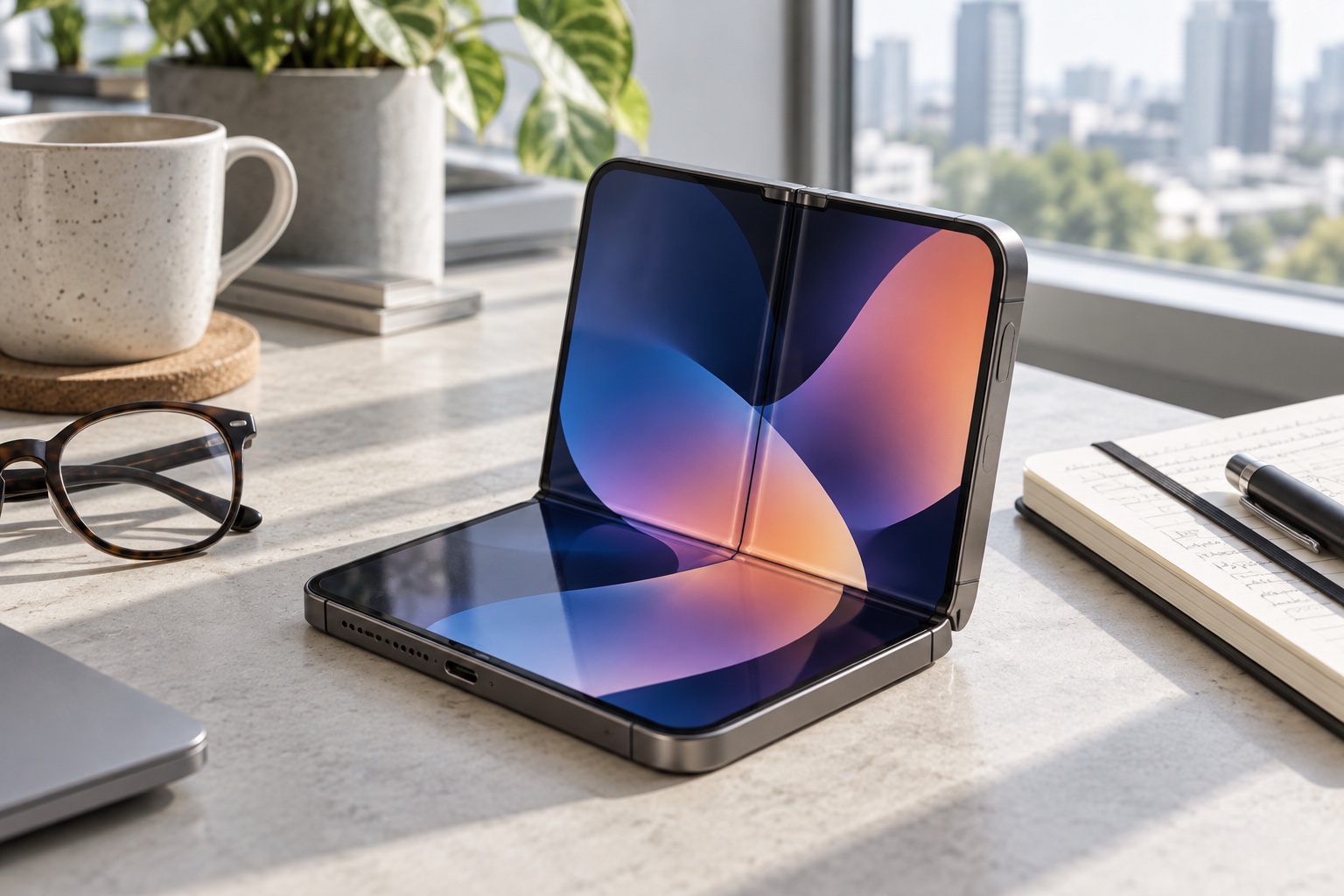
Apple has taken an unusual route: the outer and inner displays use the same aspect ratio. The company says that should keep apps from radically changing shape when the device opens; the same content simply gains more room.
The 5.4-inch exterior display is meant for one-handed use. The 7.6-inch inner panel supports ProMotion, an always-on mode and up to 3,000 nits of peak outdoor brightness. A matte surface is intended to reduce reflections and make the crease less noticeable.
Early reviewers report that the fold line is visible in certain light, even though Apple hides it well on demonstration units. The meaningful test will come after months of daily folding. A launch event cannot show how a material will age.
 ✦ AI
✦ AITouch ID instead of Face ID
The iPhone Duo does not use the familiar Face ID system. It relies on Touch ID built into the side button, along with Apple Watch authentication. That approach works the same way whether the phone is open or closed.
The inner display contains an under-screen FaceTime camera that becomes noticeable only when it is in use. A separate front camera sits on the outer panel. The rear camera system is more modest than the one on the iPhone 18 Pro: early hands-on reports note the absence of a dedicated telephoto lens, although the main camera provides a two-times crop.
What changes in iOS
iOS 27 has been adapted for the hinge. On the larger display, users can run two apps side by side or pin a pair of apps to launch together. The interface reacts to the opening angle: controls move, and a partly folded phone can split the keyboard across its two halves.
Apple says Apple Pencil with USB-C support is coming to both displays later this year. Netflix, Zoom and Slack are already adapting their apps to the foldable layout. Multitasking still has a limitation: two windows divide the screen evenly, and their widths cannot yet be freely adjusted.
Performance and battery
Inside are the same A20 Pro chip found in the iPhone 18 Pro, a new C2 modem, a vapor chamber and a dual-cell battery. Apple promises all-day battery life, but it is not yet possible to judge endurance under continuous use of the larger display. Battery life is often the weak point of slim foldable devices.
The enclosure uses Grade 5 titanium, the hinge contains more than one hundred parts and the rated protection is IP68. The specifications sound strong, but repairability and the cost of replacing a flexible display will not be clear until the device is in customers’ hands.
Price and configurations
The 256GB model costs $1,999. A 512GB version is priced at $2,199, while the 2TB configuration costs $3,199. That is more than a conventional iPhone, but broadly in line with large foldable phones from Samsung and Google.
For that price, buyers are getting more than a compact tablet: they are getting a first-generation device. They will have to accept the risks of a new design, including the crease, a complex hinge, unknown long-term durability of the inner coating and a limited selection of optimized apps at launch.
Bottom line
The iPhone Duo looks like Apple’s boldest device in years. The company did not invent the foldable smartphone, but it has tried to address its central problem: the gap between a compact outer display and useful internal space. The question now is not whether the launch looked impressive. It is whether the display, hinge and battery can withstand everyday use in a device that starts at $2,000.